Case Study · Community Organizing · Fundraising · Racial Justice · 2020–2021
Reparations Roundtable
I helped lead a white anti-racist fundraising organization raising money for Black Lives Matter Louisville. Here's what that work looked like — and what it taught me.
White people who believe in racial justice have an obligation to put money — and time, and skills — behind that belief.
Reparations Roundtable was the anti-racist and abolitionist white fundraising project of Black Lives Matter Louisville. The premise was simple and non-negotiable: white people who believe in racial justice have an obligation to put money — and time, and skills — behind that belief, in support of Black-led organizations doing the work.
I came to BLML's orbit through my existing commitments to equity and abolition. I helped lead the Reparations Roundtable alongside other white organizers, focused primarily on fundraising strategy and execution.
We needed to move money quickly and direct it where it would do the most good.
On March 13, 2020, Louisville Metro Police officers killed Breonna Taylor in her apartment. She was 26 years old. What followed was a sustained period of organizing, protest, and community mobilization in Louisville and across the country. BLM Louisville was at the center of that work — coordinating actions, providing mutual aid, supporting families, and sustaining the infrastructure of a movement that the mainstream kept expecting to end.
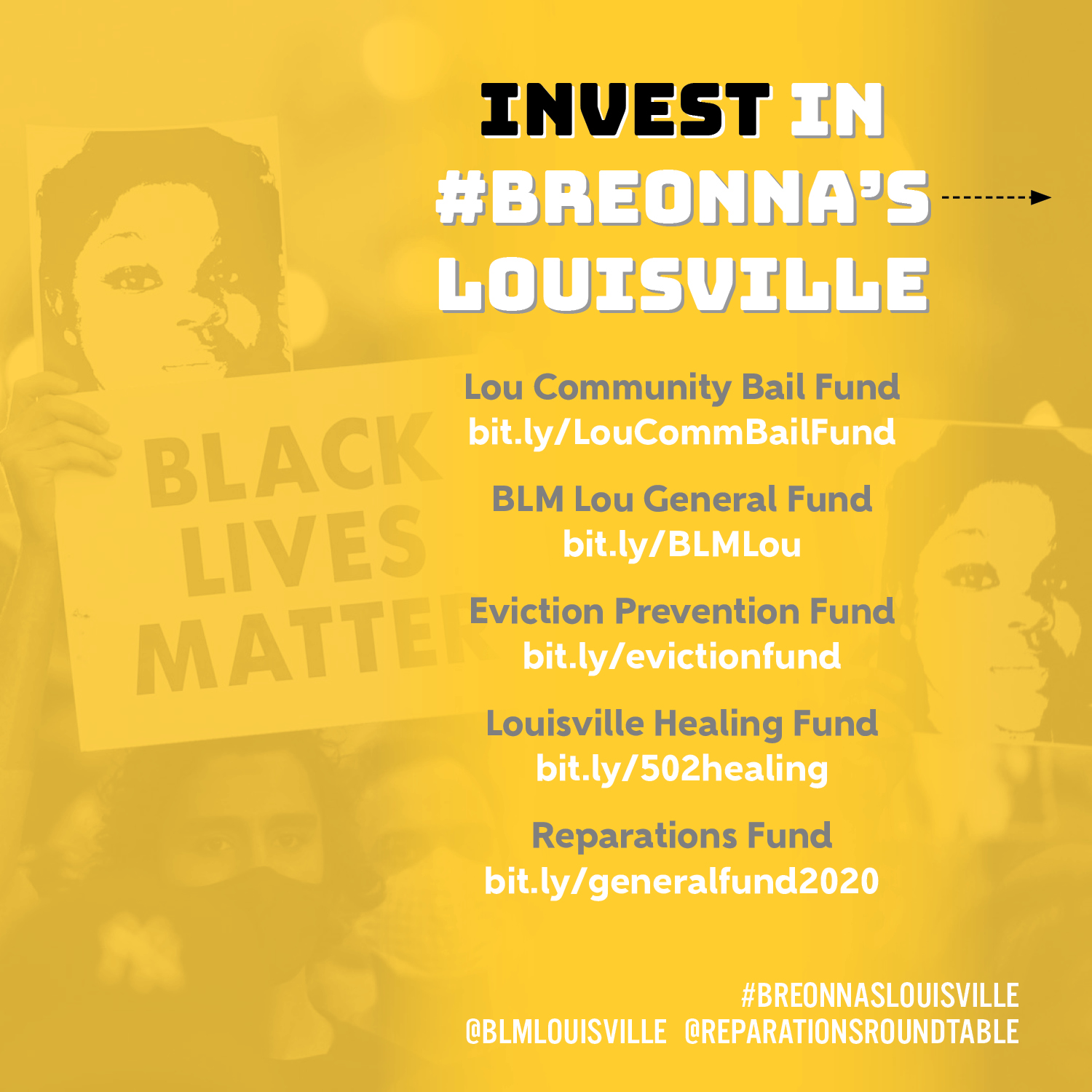
We needed to move money quickly and direct it where it would do the most good. I designed the "Invest in Breonna's Louisville" social media series to do exactly that: a direct graphic campaign naming five community funds — the Lou Community Bail Fund, BLM Lou General Fund, Eviction Prevention Fund, Louisville Healing Fund, and Reparations Fund — with short links to each. No copy to scroll through. No narrative to read. Just where to go and what to do.
Not a program. Not a service model. Direct.
Together, Reparations Roundtable raised hundreds of thousands of dollars for Black Lives Matter Louisville's racial justice work, primarily through crowdfunding and direct appeals to white donors and community members.
The funds were distributed directly to impacted people — rent assistance, help escaping intimate partner violence, bail, community recovery. Not a program. Not a service model. Direct.
I brought both design and strategy to the fundraising effort. The social media work was part of a larger communications infrastructure I helped build to sustain giving over time, not just during peak moments of visibility.
High contrast. Bold type. Minimal copy. The moment demanded action, not reading.
The visual language of the Reparations Roundtable graphics reflects the urgency and clarity of the moment. High contrast. Bold type. Minimal copy — because the moment demanded action, not reading.
The Invest in Breonna's Louisville series uses a gold background with ghosted protest photography: a BLM sign, a woman's face. The type is white and black, tight and direct. The five fund names are centered and bolded. Everything points to a link. That's it.
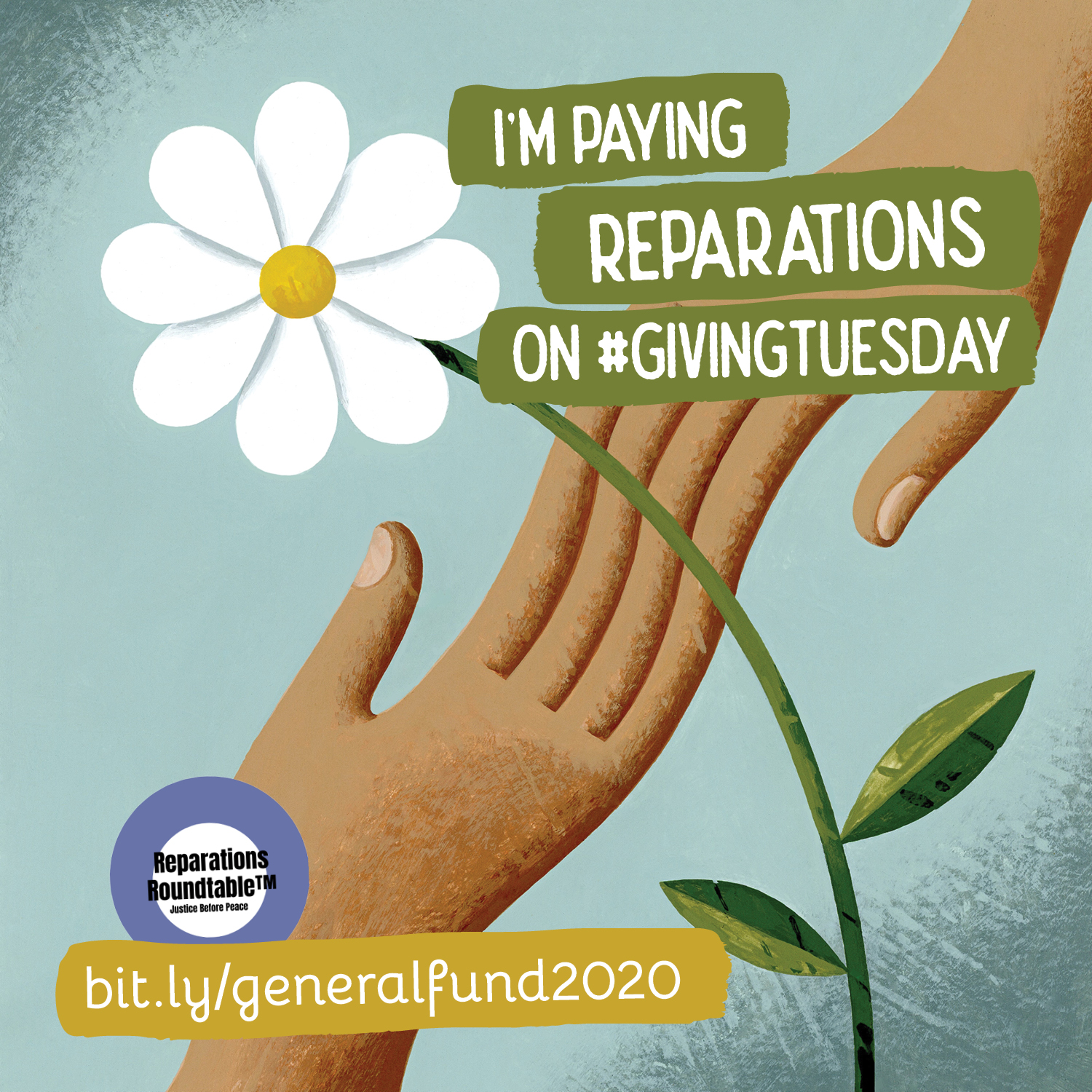
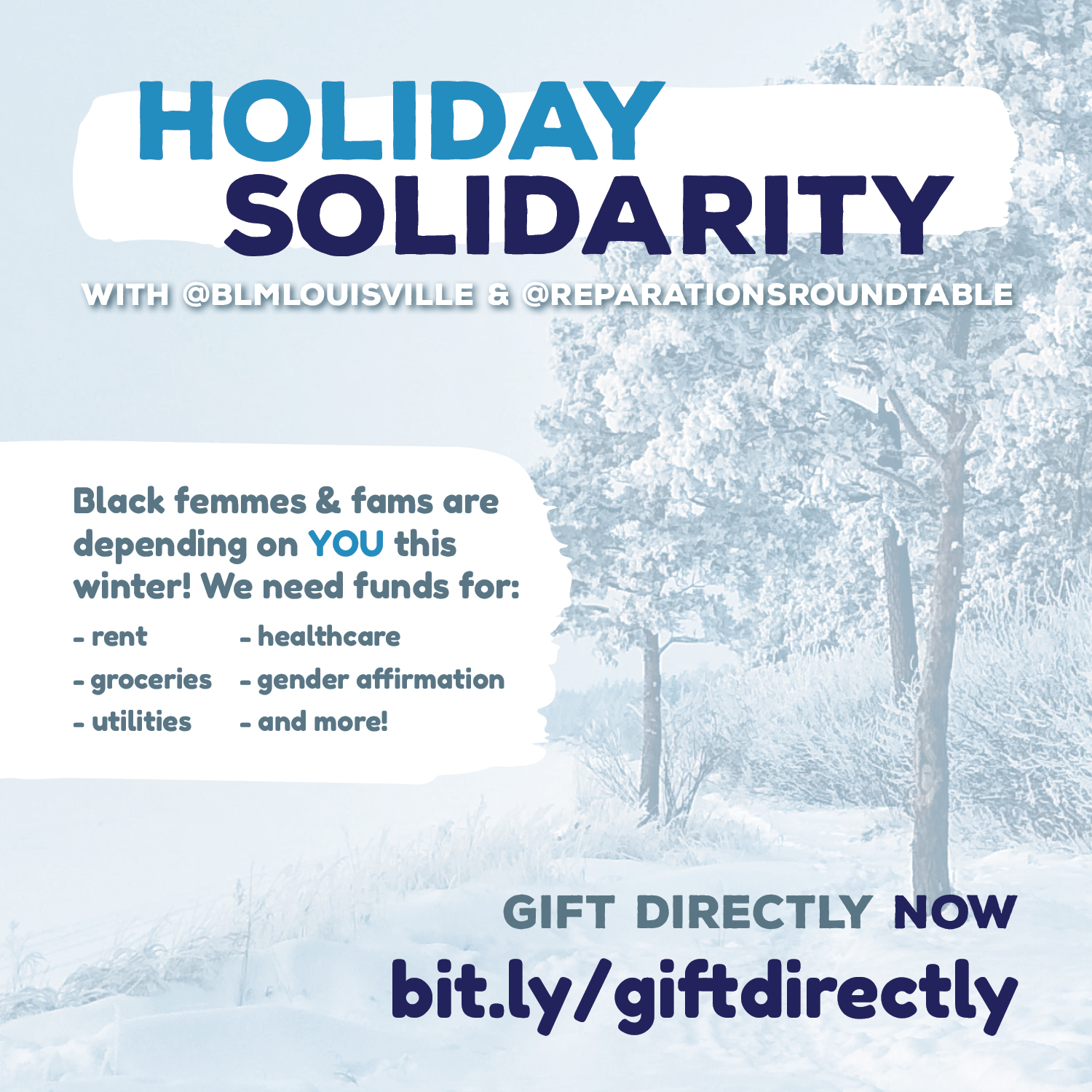
Subsequent campaigns — Giving Tuesday, holiday solidarity appeals, COVID-19 mutual aid graphics — followed the same logic. The goal was to build a communications infrastructure that sustained giving over time, not just in moments of peak attention. That required visual consistency and a clear, repeated ask.
Accountability doesn't end when the moment fades. That's when it starts.
This work taught me something important about sustained accountability. The Reparations Roundtable wasn't a response to a moment — it was a practice. White people who commit to racial justice during a highly visible moment and then step back when visibility fades aren't doing accountability work. They're doing reputation management.
Building communications infrastructure to sustain giving over time — not just when the world is watching — was a deliberate choice. The design system, the consistent visual language, the ongoing campaign calendar: all of it was in service of making it easy to keep giving long after Breonna Taylor's name stopped trending.