Case Study · Content Strategy · Social Media · Public Health · 2024–2025
University of Kentucky Harm Reduction Hub
Drug supply alerts, media strategy, and research infrastructure — built for a public health program that operates at the speed of the street.
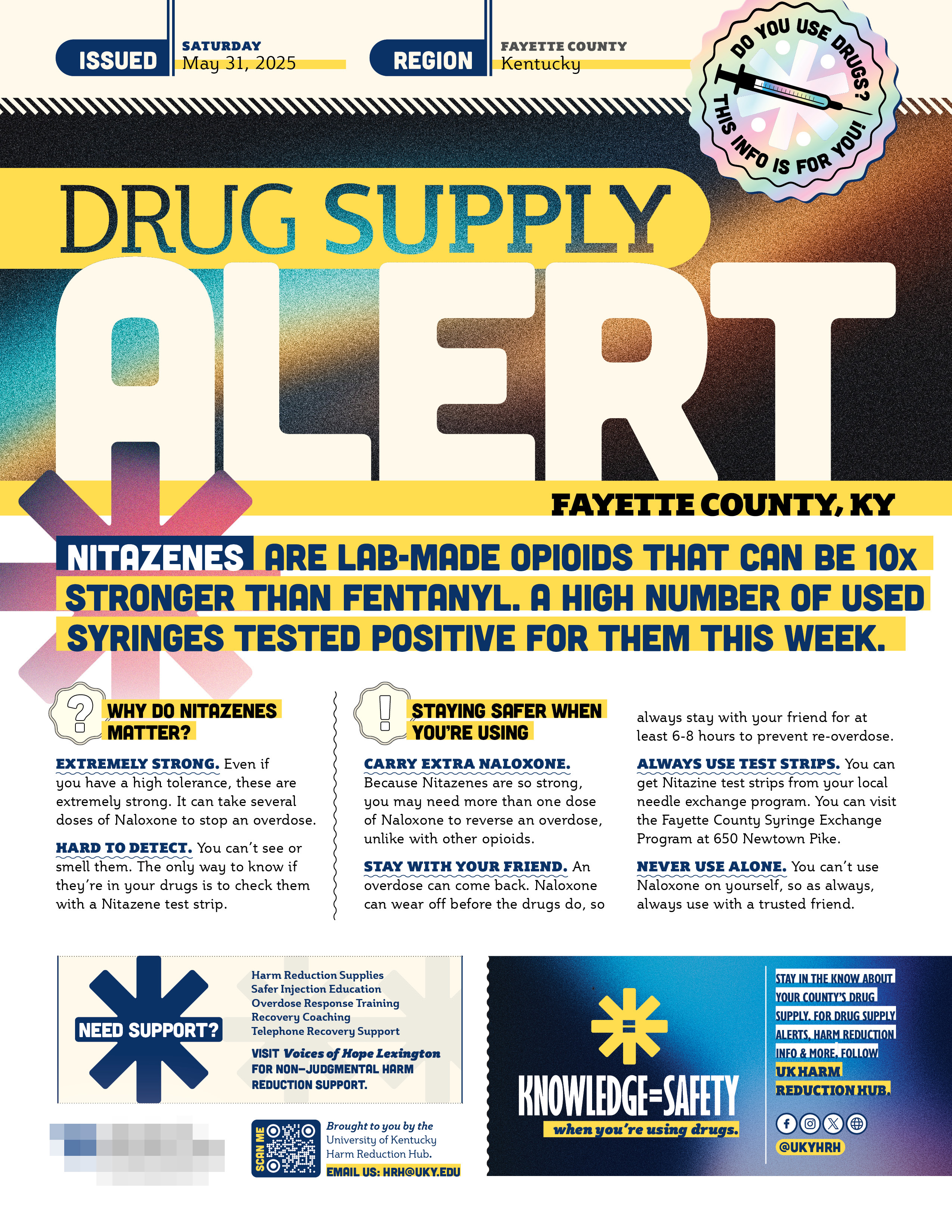
Reusable templates for real-time drug supply alerts — fast enough to matter, clear enough to save lives.
The UK Harm Reduction Hub monitors Lexington's drug supply by testing residue in used syringes collected from local syringe exchange partners. When something new or dangerous shows up in the supply — a novel synthetic opioid, a contaminant, a spike in a known substance — staff need to get accurate, actionable information out fast.
I designed a system of reusable templates — a print flyer and a matching social media post series — that HRH staff can customize and release themselves whenever a new alert is needed. No designer required. The system is built for speed and legibility: high contrast, direct language, a clear hierarchy that works on a cracked phone screen shared into a group chat.
Designed with the community. Grounded in what actually works.
Most drug supply notices are an afterthought — a wall of text in a PDF no one reads. We set out to make something different: alerts that people who use drugs would actually stop and look at, trust, and share. That meant doing the design work before the design work.
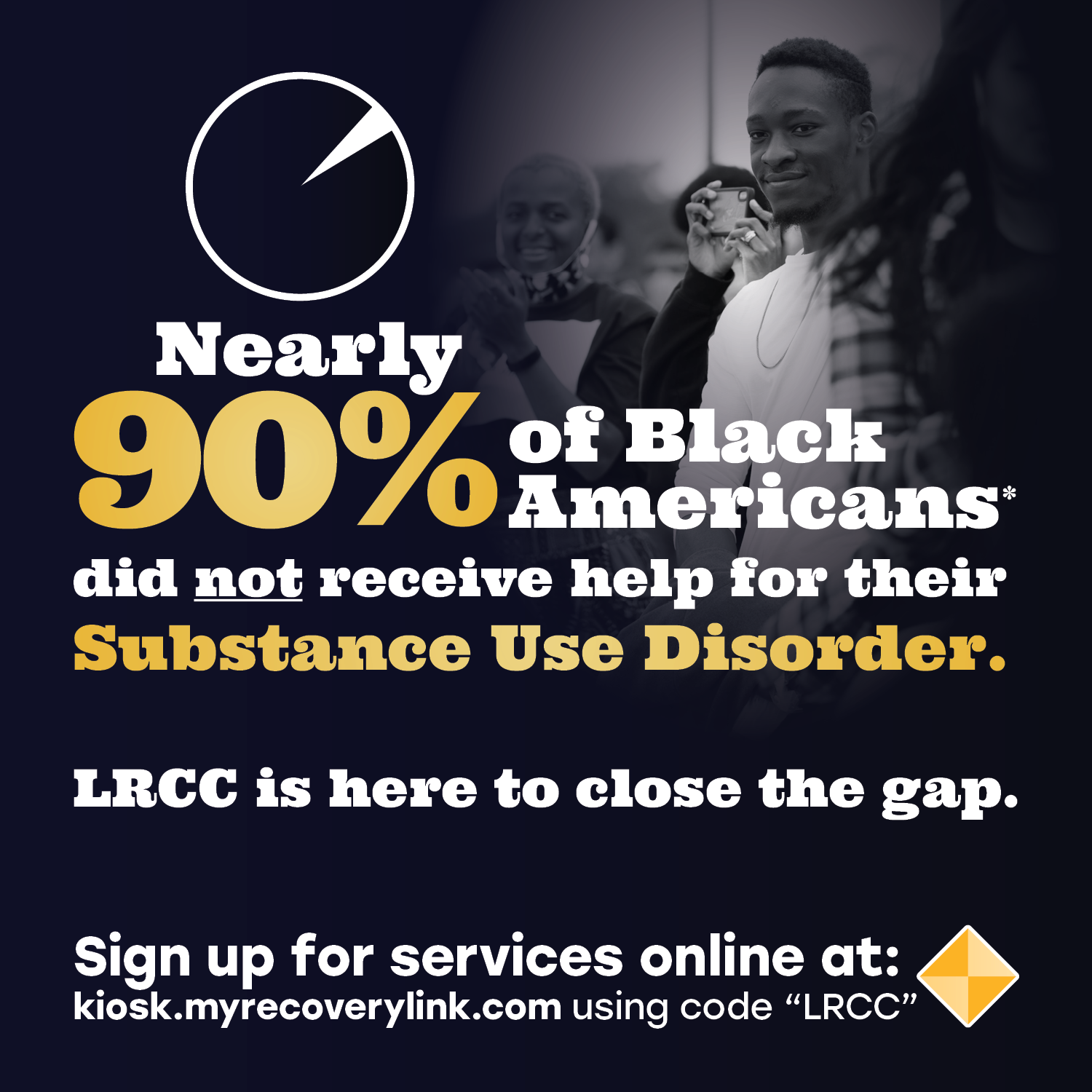
I ran two focus groups with Recovery Coaches at Voices of Hope — peer specialists with direct lived experience in Lexington's recovery community. They told us exactly what they'd look at, what they'd skip, what felt condescending, and what felt real. Those conversations shaped every visual decision that followed: the color logic, the hierarchy, the language level, the format.
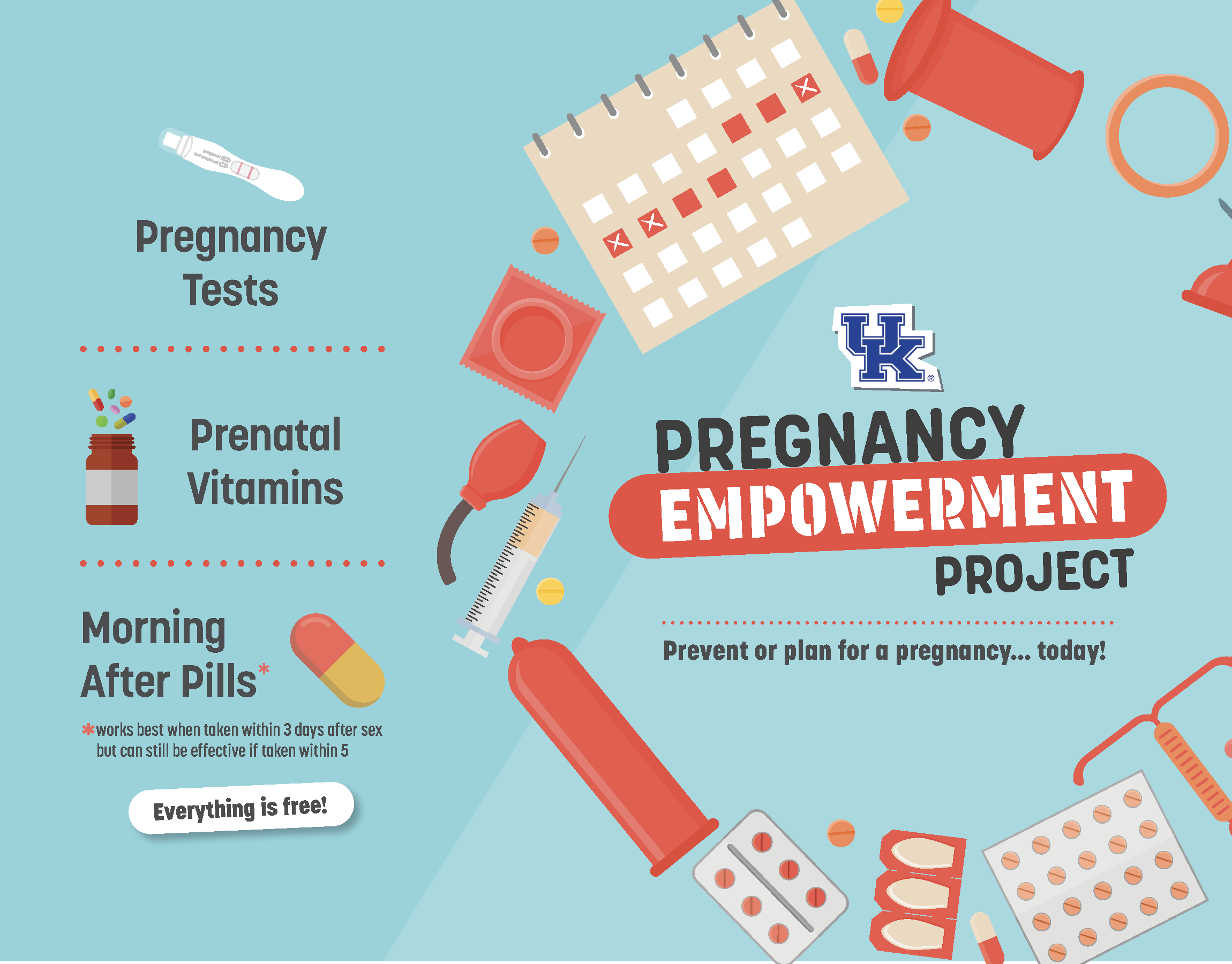
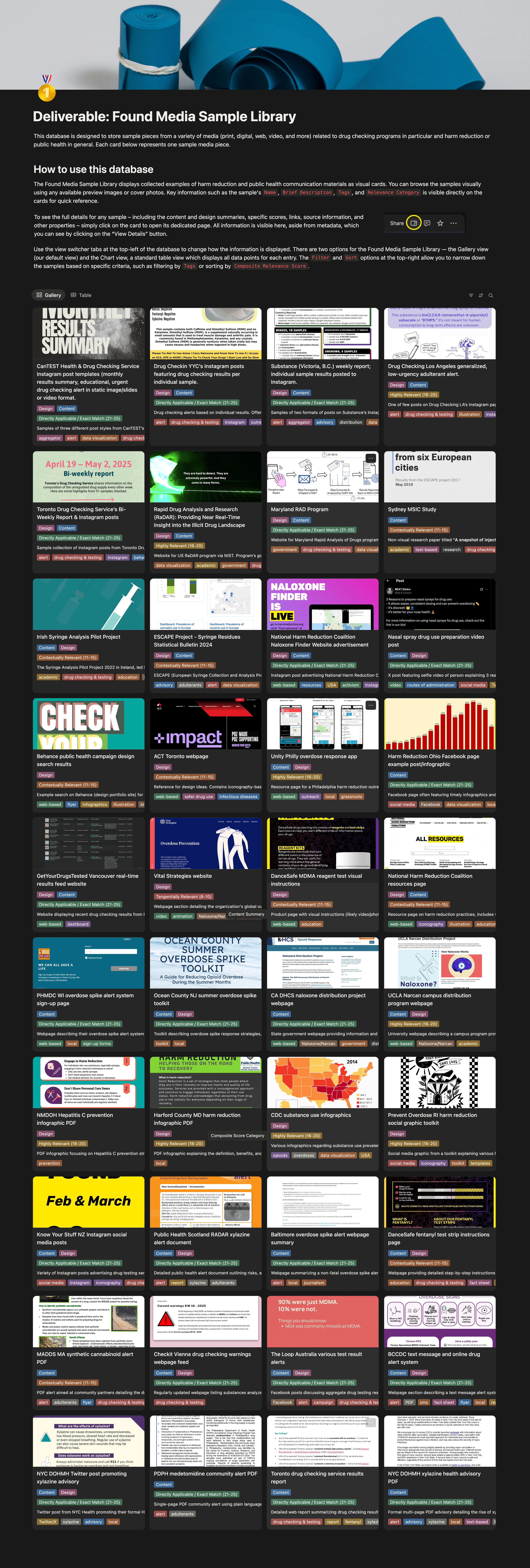
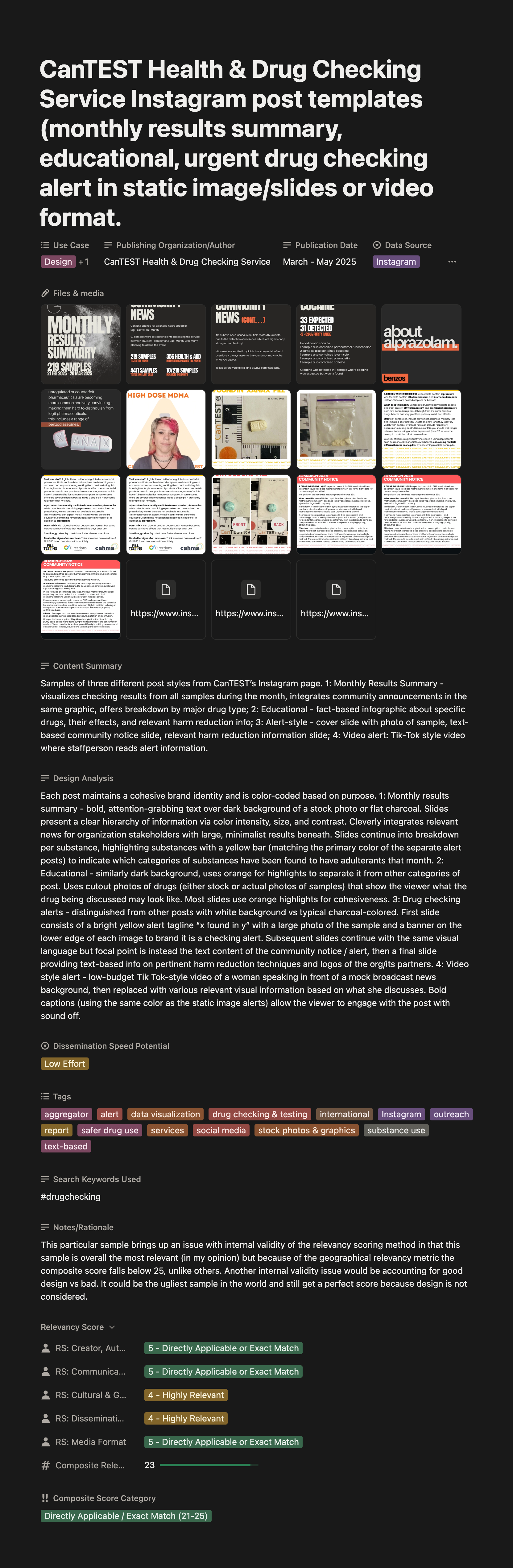
In parallel, I built a Notion-based found media gallery to systematically collect and organize precedent examples — drug checking notices, harm reduction social posts, public health alerts, and adjacent design work from organizations around the world. Rather than designing from gut instinct or guesswork, we built the system on a documented foundation of what was already working in the field.
Found Media Gallery — Overview
Found Media Gallery — Individual Entry
A quantitative rubric for what "good" actually looks like.
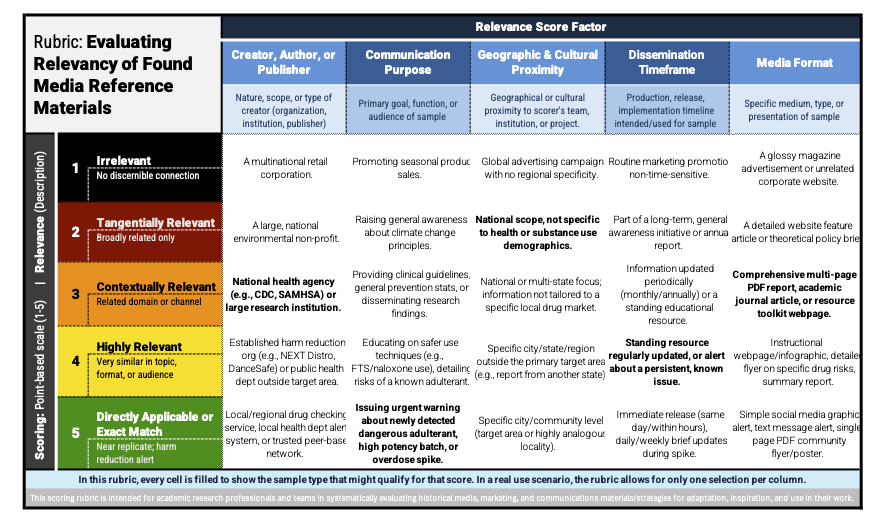
Collecting examples isn't enough on its own — you need a way to extract signal from them. I designed a structured media evaluation tool that scored each found media sample across a set of criteria drawn from health communication research and harm reduction practice: visual clarity, reading level, emotional tone, format versatility, and credibility cues, among others.
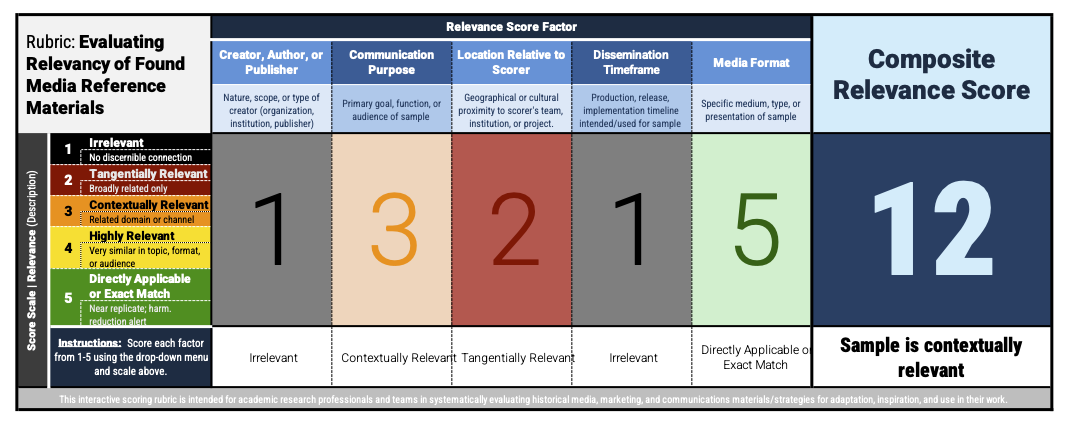
Every sample in the gallery was run through the rubric and given a composite score, which fed directly into the design decisions downstream. Instead of "I like this one," we had a documented basis for the choices we made — the kind of evidence that matters when you're doing public health work and need to defend your approach.
Search Strategy Brief

Media Sample Evaluation Tool
Composite Score Calculator
Seven posts. One series. Built to travel.
The social media post series came directly out of the research. The found media gallery and evaluation rubric told us what the field was missing: posts that were visually distinct enough to stop a scroll, direct enough to be understood at a glance, and structured enough to work as a series without feeling repetitive.
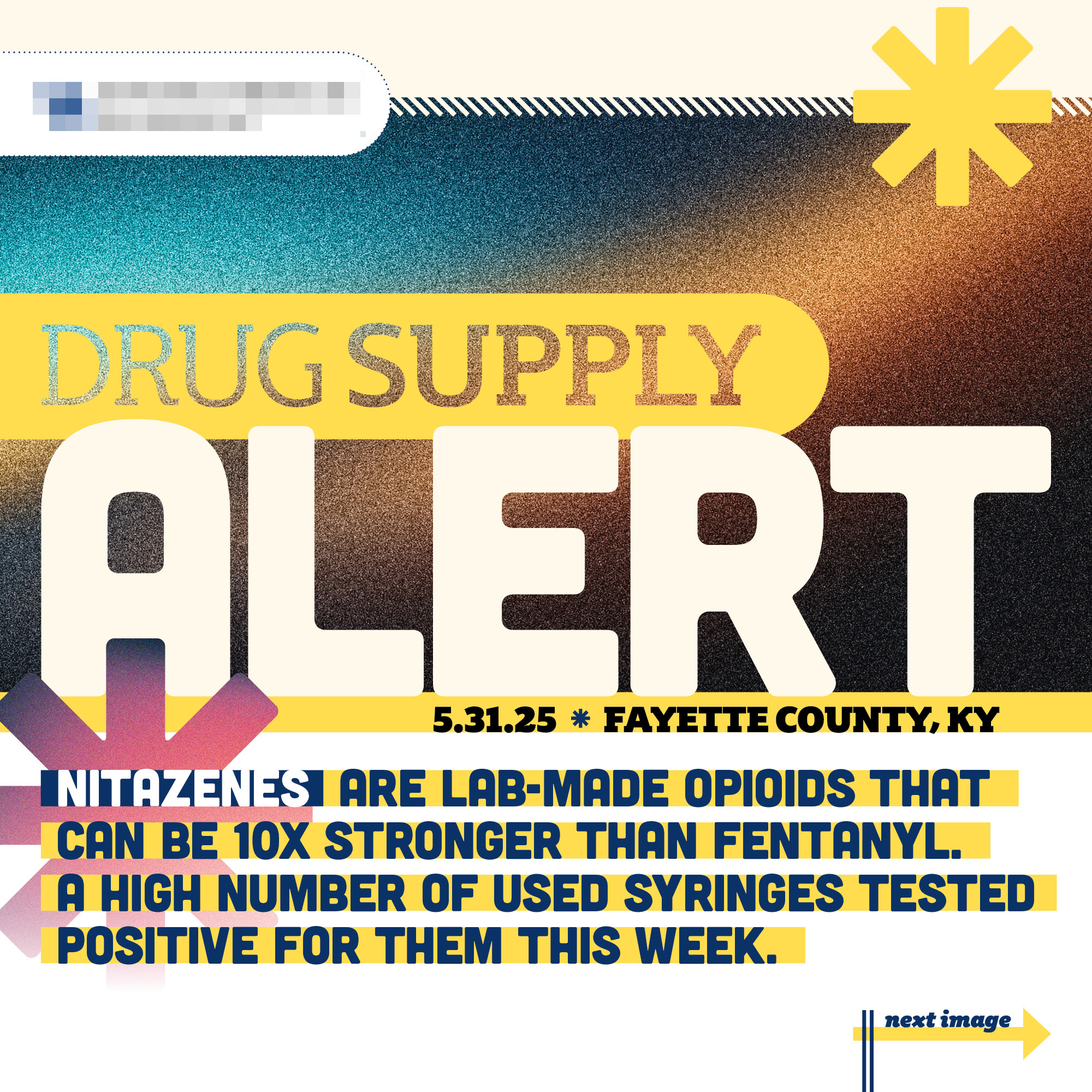
The seven-post Nitazene alert campaign translates the same information hierarchy as the print flyer into a format built for Instagram and Facebook — bold type, high-contrast color fields, and a clear content arc that moves from the alert itself through context, risk, and harm reduction guidance. Each post is a standalone piece; together they tell the whole story.
Like the flyer, the social templates are designed to be reused. When the next alert comes through, HRH staff can swap in new substance names, new data, and new dates without starting over — and without needing a designer in the room.
Drug Supply Alert — Social Post Series 1 / 7
Post caption
❗️❗️❗️DRUG SUPPLY ALERT for Fayette County, KY [5.31.25]❗️❗️❗️. Highly potent nitazenes, up to 10x stronger than fentanyl, were found in local drug samples this week.